
How Roll Configuration Affects Product Quality in Hot Rolling Mills

Introduction
In the steel manufacturing industry, product quality is one of the key factors that determine market competitiveness. Among the many factors affecting the quality of hot rolled products, the roll configuration of a hot rolling mill plays a critical role. Different rolling mill designs, including 2-high, 3-high, 4-high, and 6-high mills, offer varying levels of rigidity, thickness control, strip flatness, and surface quality.
Understanding how roll configuration influences product quality can help manufacturers select the most suitable rolling equipment for their production requirements and quality standards.
2-High Rolling Mills: Simple and Cost-Effective
A 2-high rolling mill consists of two large work rolls that directly apply rolling force to the material. This is one of the earliest and simplest rolling mill designs.
Advantages
- Simple mechanical structure
- Low investment cost
- Easy operation and maintenance
- Suitable for rough rolling applications
Impact on Product Quality
Due to the large diameter of the work rolls, roll deflection is more likely to occur under high rolling loads. This can affect thickness uniformity and strip flatness, especially when rolling wider materials.
As a result, 2-high rolling mills are generally used for products where dimensional precision is not the primary requirement.
3-High Rolling Mills: Improved Production Efficiency
A 3-high rolling mill uses three rolls arranged vertically. Material can pass through the rolls in alternating directions without reversing roll rotation, increasing production efficiency.
Advantages
- Higher throughput compared with 2-high mills
- Reduced rolling cycle time
- Improved operational efficiency
- Suitable for medium-sized steel products
Impact on Product Quality
Compared with 2-high mills, 3-high mills provide better thickness consistency and production stability. However, their capability for shape control and surface quality improvement is still limited when compared with more advanced rolling mill configurations.
For applications requiring moderate dimensional accuracy, 3-high mills offer a practical and economical solution.
4-High Rolling Mills: Enhanced Thickness Accuracy and Flatness
A 4-high rolling mill consists of two smaller work rolls supported by two larger backup rolls. This configuration is widely used in modern steel production.
Advantages
- Reduced work roll deflection
- Improved thickness control
- Better strip flatness
- Higher rolling force capacity
- Increased productivity
Impact on Product Quality
The backup rolls provide support to the work rolls, minimizing deformation during rolling. This significantly improves thickness accuracy across the entire strip width and reduces flatness defects.
The smaller work rolls also allow for more precise control of the rolling process, resulting in better surface quality and dimensional consistency.
Because of these advantages, 4-high rolling mills are commonly used for producing high-quality hot rolled coils, strips, and plates.
6-High Rolling Mills: Superior Quality Performance
A 6-high rolling mill incorporates intermediate rolls between the work rolls and backup rolls. This design provides additional support and greater control over roll bending and pressure distribution.
Advantages
- Excellent strip shape control
- Superior thickness accuracy
- Improved surface finish
- Enhanced rolling stability
- Suitable for thin-gauge and high-quality products
Impact on Product Quality
The intermediate rolls allow operators to fine-tune rolling pressure and compensate for roll deflection more effectively. This helps eliminate common strip defects such as edge waves, center buckles, and uneven thickness distribution.
As a result, 6-high rolling mills can achieve outstanding flatness, dimensional accuracy, and surface quality, making them ideal for demanding applications in automotive, appliance, and high-grade steel manufacturing industries.
Comparison of Product Quality Performance
| Rolling Mill Type | Thickness Accuracy | Flatness Control | Surface Quality | Typical Applications |
|---|---|---|---|---|
| 2-High Mill | Moderate | Moderate | Moderate | Rough rolling, structural steel |
| 3-High Mill | Moderate to High | Moderate | Moderate | Medium-duty rolling operations |
| 4-High Mill | High | High | High | Hot rolled coils, strips, and plates |
| 6-High Mill | Very High | Excellent | Excellent | Premium steel products and precision applications |
Other Factors Affecting Product Quality
While roll configuration is a critical factor, product quality is also influenced by several other aspects of the rolling process, including:
- Rolling force and reduction schedule
- Roll material and surface condition
- Temperature control during rolling
- Automatic gauge control systems (AGC)
- Cooling and coiling processes
- Equipment maintenance and alignment
A well-designed rolling mill combined with advanced automation and process control can significantly improve overall product consistency and production efficiency.
Conclusion
Roll configuration has a direct and significant impact on the quality of hot rolled products. As the number of supporting rolls increases, the rolling mill gains greater rigidity, improved thickness control, better flatness performance, and enhanced surface quality.
While 2-high and 3-high rolling mills remain suitable for basic rolling applications, 4-high and 6-high mills provide clear advantages for manufacturers seeking higher product quality and tighter dimensional tolerances.
As global demand for premium steel products continues to grow, advanced roll configurations will remain an essential component of modern hot rolling technology, helping steel producers achieve superior quality, higher efficiency, and stronger market competitiveness.
 Global Steel Demand Stabilizes in 2026: What Opportunities Lie Ahead for Used Steel Equipment?
  Leveler and Cut-to-Length Lines Move Toward Higher Precision as High-Strength Steel Processing Drives Upgrades
  Cold Mill Rolls: Technology Upgrades Support Higher Precision and Rolling Performance
  Domestic Hot-Rolled Coil Transactions Maintain Year-on-Year Growth, Showing Resilient Market Demand
  Green Steel Transition Accelerates the Construction of Next-Generation Pickling Lines
  Global Steel Producers Continue Investing in New Cold Rolling Mills
  Global Steel Producers Continue Expanding Cold Rolling Capacity
  Global Skin Pass Mill Market Reaches $513 Million in 2025, Projected to Exceed $623 Million by 2032
  The Critical Role of Skin Pass Mills in Cold Rolled Strip Production
  July 2023 chinese steel products import and export express
  2023 China Chinese Iron and steel industrial reform in 2023
  China national steel production in May 2023
  GLIMPSE 4 HIGH COLD ROLLING MILL DATA SHEET
  Application comparison between 6-High mill and 18-High mill on high strength steel
  GLIMPSE HC 6 HIGH COLD ROLLING MILL DATA SHEET
 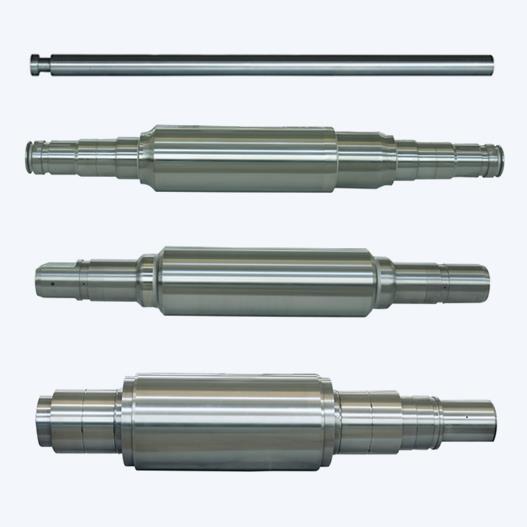 The classification of roll materials
 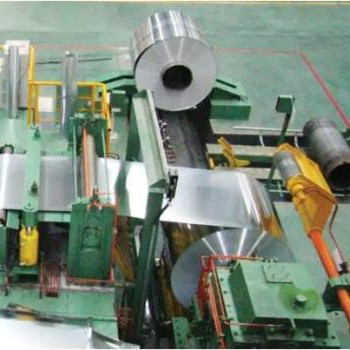 Requirements of cold rolling flat products
  GLIMPSE awarded as a high-quality Chinese supplier of high-quality rolling mill
 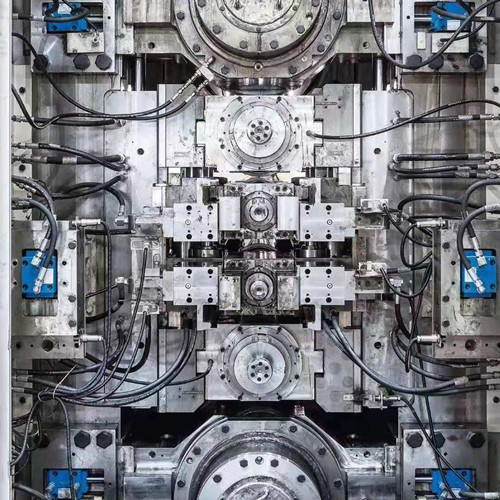 The principle and advantages of CVC rolling mill
  What is cold rolling mill?