
Leveler and Cut-to-Length Lines Move Toward Higher Precision as High-Strength Steel Processing Drives Upgrades
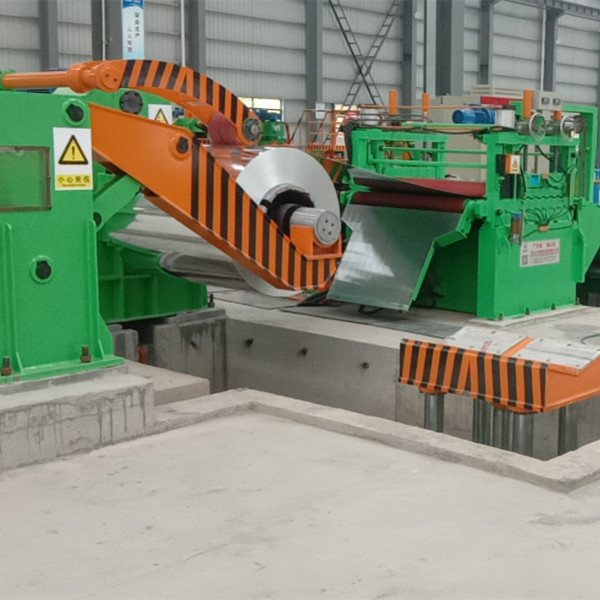
A Leveler and Cut-to-Length Line (CTL Line) is an important processing system for flat steel products. It typically processes steel coils through uncoiling, leveling, measuring, cutting and stacking to produce flat sheets with specified dimensions.
As steel producers and processors increasingly handle high-strength steel and heavier-gauge materials, the requirements for leveling and cut-to-length equipment are also becoming more demanding.
Traditional CTL lines designed mainly for conventional carbon steel may require upgrades when they are used to process materials with higher strength, greater thickness or tighter dimensional requirements.
1. High-Strength Steel Places Greater Demands on Leveling Equipment
High-strength steel has higher yield and tensile strength than conventional steel. As a result, greater leveling force may be required to correct coil shape and residual deformation.
This places higher requirements on:
- Leveler roll design
- Machine frame rigidity
- Hydraulic adjustment systems
- Drive capacity
- Roll-gap control
- Material support and feeding systems
For high-strength materials, the objective is not simply to remove coil curvature. The leveling process also needs to provide stable and consistent strip shape for subsequent cutting and processing.
2. Leveling Accuracy Directly Affects Product Quality
The final sheets produced by a CTL line often need to meet strict requirements for length, width, flatness and dimensional consistency.
Modern leveling and cut-to-length lines therefore need accurate control of:
- Uncoiling tension
- Leveler roll penetration
- Strip speed
- Cutting length
- Shear synchronization
- Sheet feeding
- Stacking
Stable leveling conditions are particularly important when processing high-strength or heavy-gauge steel, where residual deformation can be more difficult to control.
3. Cut-to-Length Systems Are Moving Toward Higher Automation
One of the main objectives of a CTL line is to achieve accurate and repeatable sheet lengths.
Modern systems can use encoders, PLCs, servo drives and measurement systems to monitor strip movement and control the cutting position.
A typical production process is:
Coil → Uncoiler → Leveler → Measuring System → Shear → Stacker
Through automated control, the line can reduce manual adjustment, improve cutting consistency and increase production efficiency.
4. Equipment Must Handle a Wider Range of Steel Grades and Sizes
Modern steel processing lines may need to handle different material grades, thicknesses, widths and strength levels.
As a result, the material range that a CTL line can process has become an important factor in equipment selection.
The equipment design needs to consider:
Material Grade + Thickness + Width + Yield Strength + Coil Weight + Cut Length
These parameters influence the required leveler roll diameter, roll spacing, leveling capacity, shear capacity and main drive power.
5. Automation Modernization Is an Important Upgrade Direction
For older CTL lines, the mechanical equipment may still have useful service life, while the original electrical and control systems may have become outdated.
PLC systems, variable-frequency drives, measuring systems, sensors and operator interfaces can become difficult to maintain as components reach the end of their commercial lifecycle.
As a result, modernization projects can adopt an approach based on:
Retain Mechanical Equipment + Upgrade Critical Components + Modernize Electrical Systems + Update PLC/HMI + Optimize Automation Control
This can improve the reliability and operating accuracy of existing production lines without necessarily replacing the entire system.
6. Servo and Measurement Technologies Improve Cutting Accuracy
Cutting accuracy is closely related to the stability of strip feeding and measurement.
Modern CTL lines can integrate high-resolution encoders, servo systems and automatic length measurement to improve synchronization between strip movement and the shear.
For high-speed production, accurate synchronization is particularly important because even a small measurement error can result in deviations in the final sheet length.
Therefore, the combination of measurement, drive control and shear synchronization is becoming an important part of modern CTL technology.
Industry Trends
The development of leveler and cut-to-length equipment is increasingly focused on several areas:
Higher Leveling Accuracy
Improved leveling capability for high-strength and heavy-gauge materials.
Higher Cutting Accuracy
More precise control of sheet length and dimensional consistency.
Wider Material Capability
The ability to process different grades, thicknesses and widths.
Higher Automation
Greater use of PLCs, servo systems, sensors and automated process control.
Digital Monitoring
Integration of production data, equipment status and quality information.
Modernization of Existing Lines
Combining mechanical refurbishment with electrical, drive and automation upgrades.
Conclusion
The development of high-strength and high-quality steel products is creating new requirements for downstream processing equipment.
For leveler and cut-to-length lines, the key priorities are increasingly focused on leveling force, flatness, dimensional accuracy, cutting synchronization, material flexibility and automation.
For existing production lines, modernization can provide another pathway for improving performance. Mechanical equipment can be retained where appropriate, while PLCs, drives, measurement systems, sensors and automation controls can be upgraded.
As a result, the future of CTL technology is not simply about faster cutting. It is increasingly about achieving higher precision, broader material capability and more intelligent process control.
 Cold Mill Rolls: Technology Upgrades Support Higher Precision and Rolling Performance
  Domestic Hot-Rolled Coil Transactions Maintain Year-on-Year Growth, Showing Resilient Market Demand
  Green Steel Transition Accelerates the Construction of Next-Generation Pickling Lines
  Global Steel Producers Continue Investing in New Cold Rolling Mills
  Global Steel Producers Continue Expanding Cold Rolling Capacity
  Global Skin Pass Mill Market Reaches $513 Million in 2025, Projected to Exceed $623 Million by 2032
  The Critical Role of Skin Pass Mills in Cold Rolled Strip Production
  How Roll Configuration Affects Product Quality in Hot Rolling Mills
  July 2023 chinese steel products import and export express
  2023 China Chinese Iron and steel industrial reform in 2023
  China national steel production in May 2023
  GLIMPSE 4 HIGH COLD ROLLING MILL DATA SHEET
  Application comparison between 6-High mill and 18-High mill on high strength steel
 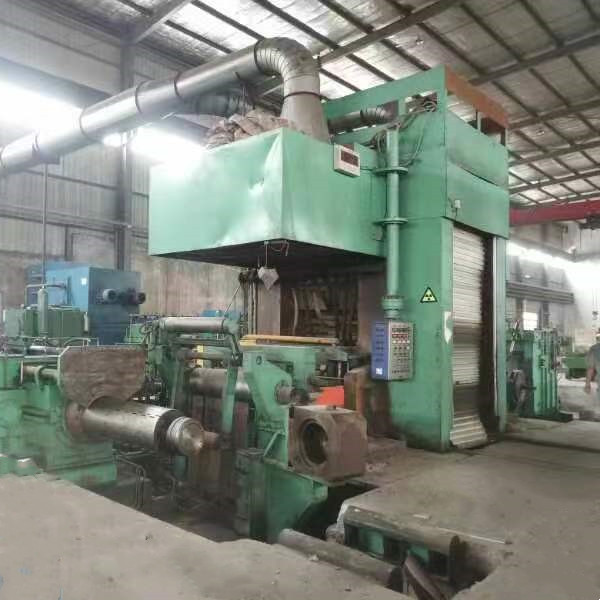 GLIMPSE HC 6 HIGH COLD ROLLING MILL DATA SHEET
 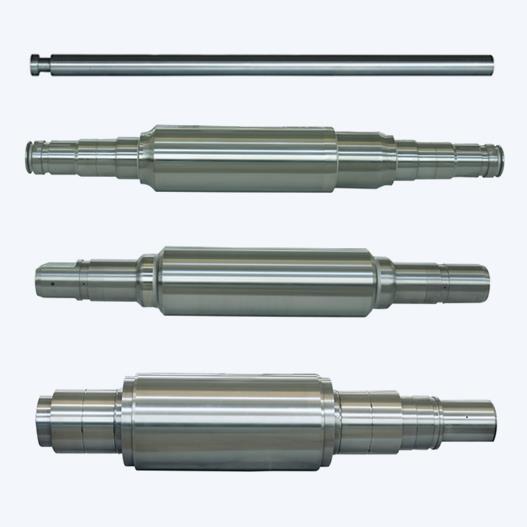 The classification of roll materials
  Requirements of cold rolling flat products
  GLIMPSE awarded as a high-quality Chinese supplier of high-quality rolling mill
  The principle and advantages of CVC rolling mill
  What is cold rolling mill?
  what is cold rolling process in steel industry