
Characteristics and application of stainless steel cold-rolled strip products
author: glimpse technology
2022-10-08
Characteristics and application of stainless steel cold-rolled strip products
Summary
This article 1) briefly introduces the production process of stainless steel cold rolling, 2) explains the excellent corrosion resistance and processing of stainless steel cold -rolled plate with the product of stainless steel and steel. The connotation of stainless steel uses the scope of use of stainless steel, becoming the most widely selected structure in stainless steel. 3) It also introduces the application of stainless steel cold rolling plates in various civilian industries and industrial fields and 4) its high requirements for surface quality and performance requirements. Avoid surface defects. Therefore, the author believes that stainless steel cold -rolled plates with producers must be excellent in all aspects of process technology, operating skills, equipment configuration, and quality management level in order to meet the requirements of downstream customers as much as possible.
1 Introduction
Stainless steel has a series of characteristics such as excellent corrosion resistance, moldability, compatibility, and strong toughness within a wide temperature range. The stainless steel cold -rolled plate with products inherit the excellent corrosion resistance and processing of stainless steel. Through cold -rolled processing methods and re -processing after cold rolling surface, the surface of stainless steel has different levels of surface smoothness, patterns and colors. Become the most widely selected structure in stainless steel.
2. Stainless steel cold -rolled plate band production process
The typical stainless steel cold -rolled production process process is shown in Figure 1. Stainless steel hot -rolled black belt steel steel passes through the cover furnace (BAF), the hot roll annealing pickling unit (HAPL), multi -roller reversible rolling machine (CRM) or a cold rolling machine ( TCM), rough grinding units (CGL), cold roll annealing pickling units (CAPL), or bright annealing units (BAL), grinding unit (CGL), flattering machine (SPM) or orthopedic unit (TLL) and vertical cut ( Several professional units such as STL) or heavy volumes (RCL) or horizontal cutting (CTL) complete all processes.
3. The characteristics of stainless steel cold -rolled board belt products
3.1 Rich surface processing type
Stainless steel has become a widely selected metal material with its excellent corrosion resistance, good mechanical performance and processing performance. Through cold -rolled processing methods and re -processing after cold rolling, the surface of stainless steel can have different levels of surface smoothness, patterns and colors. The surface processing of stainless steel cold -rolled plates includes 2D, 2B, No.3, No.4, 240, 320, No.7, No.8, HL, BA, TR hard -state, pressure flowers and other surface levels. On the basis of cold rolling surfaces, a variety of deep -processed surfaces such as electroplating, electrolyte polishing, no directional hair patterns, etching, spraying, coloring, coatings, and combinations can be implemented. Coupled with the NO.1 surface and mesh plate of the hot rolling acid, there can be more than 20 species on the surface of stainless steel.
Such a rich variety of surfaces greatly improves the appearance of stainless steel, making it aesthetically pleasing, increasing its appeal to consumers and giving people a beautiful enjoyment. The different surface processing of stainless steel broadens the connotation of the use of stainless steel, thereby expanding the scope of use of stainless steel. According to the statistics of the professional stainless steel website, in 2012, China's stainless steel cold-rolled strip accounted for 70% of the total stainless steel output. In addition to the performance characteristics of the stainless steel itself, it is mainly due to the special characteristics of various surface types of the stainless cold-rolled strip in use.
3.2 wide application range
Stainless steel cold -rolled plate belt products have become widely selected metal materials with their excellent corrosion resistance, good mechanical properties, processing performance, and rich surfaces. Various civilian industries and industrial fields such as cars, elevators, containers, solar energy, precision electronics.
3.3 High surface quality requirements
As mentioned earlier, stainless steel cold -rolled plate belt products are widely used in various types of civilian industries and industrial fields. Among them, most products in buildings, elevators, containers and other industries directly use the surface of 2D, 2B, BA, grinding and other surfaces after cold -rolled processing. Products, home appliances, rail transit, automobiles, solar energy, precision electronics and other industries such as the cold -rolled surface products are used to directly use or polished and polished after molding. Therefore, the surface quality of stainless steel cold rolled plates is high.
However, due to the production of stainless steel cold rolled plate belt, more than ten continuous production processes need to be produced, which will inevitably produce surfaces such as roller seal, crushing, scratching, dirty, scale -folding peeling, oxidation skin, mixed, poor color and other surfaces and other surfaces. defect. Stainless steel cold -rolled board band products use customers' nearly zero tolerance high requirements, and have put forward high challenges to producers of stainless steel cold rolled plate bands.
The production of stainless steel cold rolling plates requires multiple processes such as steelmaking, hot rolling, and multiple continuous production links in cold rolling processes, and it is difficult to achieve zero defects. Therefore, the surface defects of the factory products are specified in the stainless steel cold -rolled band standards of various countries. Among the current common stainless steel products, the requirements of the standard JIS G 4305 of the cold -rolled stainless steel plate and steel strap are the most detailed than the quality of the appearance quality. Harm defects.
However, the steel belt usually does not eliminate the chance of defects, so it contains several abnormal parts. How to understand these three sentences described in the appearance check? First, the factory products may be defective, but these defects should not be a harmful defect in customers. Second, due to the continuity and particularity of cold rolling production, it is impossible to remove the parts of defects or even serious defects. It can also be said that it is very difficult to produce a flawless steel belt. Third, a number of abnormal parts can be sandwiched in the factory steel belt.
4. The surface processing type of stainless steel cold -rolled plate belt
The surface processing of stainless steel can be divided into two categories. One is the surface obtained by stainless steel production plants using different production processes, which is usually called rolling surface processing; the other is to change the surface level or nature of the surface Processing is generally called deep processing on the surface of stainless steel.
The surface processing of the stainless steel cold rolling plate is divided into different surface processing types according to different process methods. The standards of various countries have made corresponding provisions on the surface processing of stainless steel cold rolled plates. The stainless steel cold rolling industry is usually classified as the surface processing type of Table 1 according to the Japanese JIS JIS and the American ASTM standards. In addition to the type processing type of stainless steel cold rolled plate specified in the Table 1 standard, it can be called a rolling surface processing and mesh steel plates that use hot rolling or NO. 1 plate processing.
• NO.1
NO.1 surface is the surface obtained by heat treatment and pickling after the hot rolling plate belt. It is a black iron oxide skin generated during hot rolling and hot treatment, which is removed with a pickled or similar treatment method. This is NO. 1 surface processing. This surface is silver and white, no gloss. It is mainly used for heat -resistant and corrosion -resistant industries that do not require surface gloss, such as alcohol industry, chemical industry and large container.
•No.2D
NO.2D surface is a cold rolling surface of oxidized iron oxide. After the cold rolling, only heat treatment and pickling, not flat, the degree of light on the surface determines the degree The surface is smooth, and it is also related to removing the picking method of removing oxidation.
The NO.2D surface also includes a kind of hairy surface obtained by mild flatness on the basis of the above surface. The hair roller is used to use special processes to make the surface of the roll, that is, a number of rigidity points are formed on the surface of the roller. During the flat process, the surface structure of unevenness and rigidity is achieved on the surface of the steel plate. This is also a kind of ugly surface. This surface is particularly suitable for deeply forming processing, which can improve the friction and contact conditions between steel plates and molds, which is conducive to material flow and improves the quality of workpieces.
NO.2D's surface stainless steel is widely used in building curtain walls, especially those building parts that do not need reflective. The roughness RA value of this surface is determined by the instrument to be about 0.4 to 1.0 μm.
•No.2B
The difference between NO.2B surface and 2D surface is that it should be flat with smooth flat rollers, so it is brighter than the 2D surface. The surface roughness RA value determined by the instrument is 0.1 to 0.5 μm, which is the most common type of processing. This stainless steel surface is the most widely used. It is suitable for the general purpose of chemical industry, paper, oil, and medical industry, and can also be used as a building curtain wall.
•No.3
NO. 3 is a semi -polished surface. It is a processed surface obtained by polishing with a cold -rolled stainless steel on the surface of 2D or 2B surfaces, and the grain size is 100-120#. The surface roughness RA value determined by the instrument is 0.4 to 1.5 μm. It is suitable for construction materials, kitchen utensils, and occasions that need to be further processed after manufacturing.
•No.4
The surface of NO.4 is the fine polishing surface that is brighter than the surface of No. 3, and it is also obtained by polishing with the stainless steel cold -rolled plate on the surface of 2 d or 2 B surface. Machining surface. The surface roughness RA value determined by the instrument is 0.2 to 1.5 μm. This surface is widely used in restaurant kitchen equipment, medical equipment, container front, and suitable for the decoration of building coverage and building curtain walls. It is not easy to leave fingerprints on the surface, suitable for making steel doors.
•240#和320#
The surface of 240#and 320#is the surface obtained by polishing with a grain size of 240#or 320#, which is suitable for kitchen utensils.
• HL
HL surface steel plate is commonly known as hair pattern. The Japanese JIS standard stipulates that the continuous hair -like grinding surface obtained by polishing is used for polishing. In my country's GB3280, it is more vaguely blurred. This surface is mostly used for architectural decorations such as elevators, escalators, facades, etc.
• No.6
The surface of NO.6 is based on the surface of NO. 4, with the surface of the grinding material specified in Tampico Brush (Tampico Brush) or GB2477, which is further polished. This surface has a better metallic gloss The surface is soft, the reflective is weak, and the image is not reflected. It is very suitable for making building curtain walls and buildings. It is also widely used as kitchen utensils.
• No.7
NO.7 The surface of the surface is 600#rotating polishing wheel for fine polishing surface, with a high mirror with a high reflectivity. Equally equivalent to the surface after polishing the GB2477 prescribed W50 grinding abrasive polishing. It is mainly used for buildings and decorations.
• BA
The surface of the BA is the surface obtained by light heat after cold rolling. Light heat treatment is annealing under the protection atmosphere of the protection of the surface without oxidation, retain the luster of the cold rolling surface, and then use a high -precision and flat roller to mild and flattened to improve the brightness of the surface. This surface is close to the mirror surface, and the surface roughness RA value by the instrument is 0.05 to 0.1 μm. This surface is widely used and can be used as kitchen utensils, household appliances, medical devices, automotive parts and decorations.
• NO.8
NO.8 surface is the surface processing surface of non -research mirror mirror with the highest reflectivity, and the stainless steel deep processing industry also calls this surface as 8K board. Generally, the BA material is used for mirror processing only through the grinding and polishing process. After mirror processing, its surface is beautiful and beautiful, so most of them are used in the inlet decoration and interior decoration of the building. However, the reverse mirrors at the highway corner and the gymnasium dressing mirror, etc., used glass mirrors to break unsafe in the past. Mirror processing is a difficult topic in stainless steel polishing technology, so it produces a variety of means such as mechanical, chemical, electrochemical and liquid mechanics.
• TR (hard -state steel)
TR material is also known as hard -state steel. As the name suggests, it is a hard material. Its steel species include SUS304, SUS 301, SUS 301L. It is used for products that require strength and hardness, such as railway vehicles, conveyor belts, spring and sealing cushion ring. The principle is to use the processing hardening characteristics of Austenite stainless steel to increase the strength and hardness of the steel plate with cold processing methods such as rolling. The hard -state material is to replace the mild and flattener of the 2B surface with a mild rolling of several to dozens of percent. After rolling, the surface of the hard -state material is the rolling of the hard -state material. surface. In addition, in order to carry out shape correction and flat material after cold rolling, most of the measures that have been implemented with low temperature annealing and through tension straight machines are implemented. Or light and annealing — rolling machine rolling -low -temperature annealing (light annealing) - tension and straight -fine.
• Press the flower
The surface of the flower is a refined surface with a pattern pattern with a etching method or a rolling rolling rolling method with a pattern. The pattern is pressed on the side of the steel plate. Most of the flower pattern is the geometric figure of the rules, and some are irregular and random. For example, the grooved steel plate rolled by groove -shaped pattern rolls is in addition to the artistic effect, as well as non -slip effects.
• Grid steel plate
Use the carved roll in the end of the hot rolling or press the NO.1 plate for stamping. You can press the deeper bump pattern on the hot -rolled steel plate or NO.1 plate surface. The steel plate on the surface can be used for the floor of large public places. It is not both slippery, durable, and beautiful. It can also be used for construction and mechanical manufacturing.
5. Application of stainless steel cold rolled band
5.1 Application of Stainless Steel Cold Rolled Band
Stainless steel cold -rolled plate belts are widely used in various civilian industries and industrial fields including building decoration, products, home appliances, rail transportation, automobiles, elevators, containers, solar energy, precision electronics and other types of civilian industries and industrial fields. In 2012, the domestic market's cold -rolled plates have about 9.03 million tons. According to the forecast of the demand for key cold -rolled stainless steel consumption industries, it is expected that the demand for the downstream industry of cold -rolled stainless steel in China will exceed 12 million tons in 2015.
5.1.1 Products industry
Stainless steel products industry commonly used stainless steel materials include 304, 430, etc. The main consumer areas include sinks, tableware, tools, pressure cookers, kettles, containers, utensils, etc. are closely related to people's lives. According to incomplete statistics, there are thousands of stainless steel products companies in southern provinces such as Zhejiang, Jiangsu, Guangdong, and Fujian. The product is generally polished after molding, which is not very demanding on the quality of the raw material, but it is more sensitive to the price. In 2012, the consumption of stainless steel in the product industry was about 2.75 million tons, accounting for 38 % of the country's total consumption. With the high requirements of the urbanization process and people's quality of life, in the future, the mid -to -high -end stainless steel living appliances that can only be seen in star hotels in the past will enter ordinary people's homes. It is expected that the industry will grow steadily with domestic GDP. By 2015, the stainless steel consumption in the product industry will exceed 3.6 million tons.
5.1.2 Building decoration industry
The steel used in the building decoration industry is mainly cold-rolled stainless steel products, and the surface basically needs deep processing, which increases the added value of stainless steel products. After processing, stainless steel plate is mainly used in elevator panels, home appliance panels, electronics, kitchen and bathroom, civil decoration and building decoration industries. Due to the different market characteristics and positioning of steel products, there are strict classification levels for the surface quality after processing, which has spawned a large number of surface processing enterprises that meet different processing needs. According to statistics, in 2012, the consumption of stainless steel in the decoration industry was 1.95 million tons, accounting for 27% of the national total consumption. At present, the decoration industry is mainly based on simple polishing processing, and further processing such as etching, embossing, and coloring accounts for a relatively small proportion. Low-end polishing processing greatly restricts the development level of the decoration industry. With the improvement of people's aesthetics, the requirements for the quality of decorative panels will become higher and higher, and there will be more and more applications of stainless steel in home decoration and public decoration. In the next 5 to 10 years, the industry will increase by 8% With a steady growth rate of ~12%, by 2015, the stainless steel consumption in the building decoration industry will exceed 2.8 million tons.
5.1.3 Home appliance industry
The home appliance industry has always been the most widely used industry in Western developed countries, including a large number of industrial clusters such as refrigerators, washing machines, dishwashers, microwave ovens, electric ovens, disinfection cabinets, and small appliances. In the home appliance industry, the large amount of stainless steel is the inner tube of the automatic washing machine, the inner bile in the water heater, the inner and outer shells of the microwave oven, and the inner lining of the refrigerator, and most of the iron stainless steel is used. The microwave ovens, refrigerators, air conditioners, and television produced in my country are the most competitive products in the world. The domestic appliance industry has a broad development and application prospect for stainless steel.
In 2012, the consumption of stainless steel in the household appliance industry was about 1.04 million tons, accounting for 14% of the national total consumption. It is expected that the industry will grow steadily at a rate of 10% for a period of time in the future. By 2015, the consumption of stainless steel in the household appliance industry will reach 1.5 million tons.
5.1.4 The automotive industry
In 2012, domestic automobile production and sales reached 19.27 million and 19.36 million respectively, and the use of stainless steel for exhaust systems, decorative strips and other components exceeded 550,000 tons, accounting for 8% of the country's total consumption. With the continuous growth of China's economy, the increase of per capita income, the advancement of urbanization rate and the continuous improvement of road transportation facilities, although in the short term, after the continuous rapid development of the automobile industry, there is a certain stagnation and weakness. However, in the medium and long term, my country's auto industry market will maintain a relatively high growth trend.
5.1.5 electronic industry
5.1.6 elevator industry
At present, the per capita elevator ownership in my country is about 12.15 units/ten thousand people, only 1/2 of the world average level, far behind the high level of 120 units/ten thousand people in developed countries in Europe and the United States, and there is a lot of room for improvement in the future. In 2012, the elevator output was about 400,000 units, of which about 140,000 tons of stainless steel were used. In the coming period, China's urbanization process will be further accelerated. The development of projects such as the central and western regions and state-guided affordable housing construction will drive the growth of stainless steel demand. The average growth rate of the elevator industry is expected to be 8% to 10%. With the increasing cost pressure of the elevator manufacturing industry, the development direction of stainless steel varieties in elevators in the future will mainly use high-purity ferrite and stainless steel clad plates to replace austenitic stainless steel to enhance competitiveness.
5.1.7 Solar industry
According to the statistics of the Solar Thermal Utilization Industry Association, in 2012, the total collection area of solar water heaters in China reached 160 million square meters. The annual growth rate is 17%, and by 2020, the total collecting area of solar water heaters in the country is expected to be 300 million square meters. Due to the diversification of products and the increase in total ownership, the growth rate of the industry development in the future is estimated to be around 10%. In 2012, the consumption of stainless steel in the solar energy industry was 94,000 tons, accounting for 1.3% of the total national consumption.
6. Conclusion
The stainless steel cold -rolled plate with the product inherit the excellent corrosion resistance and processing of stainless steel and steel. Through the different processing methods of the cold rolling process and the surface re -processing after the cold rolling, it can make the surface of the stainless steel with different levels of surface flickering, and the surface of different levels. The lines and colors, such a rich surface greatly improved the appearance of stainless steel, broaden the connotation of stainless steel, thereby expanding the scope of stainless steel and becoming the most widely selected structure in stainless steel.
Stainless steel cold -rolled plate belt products are widely used in various civilian industries and industrial fields, and most of them are directly used after the surface of cold -rolled processing or after forming or shallow grinding and polishing. The production of stainless steel cold -rolled plates requires more than ten continuous industrial production processes, which will inevitably produce surface defects. Therefore, it is required that the producers of stainless steel cold -rolled plate bands are excellent in all aspects of process technology, operating skills, equipment configuration, and quality management level. Quality requirements.
Keywords: stainless steel band steel, production process, application
 Global Steel Demand Stabilizes in 2026: What Opportunities Lie Ahead for Used Steel Equipment?
 Leveler and Cut-to-Length Lines Move Toward Higher Precision as High-Strength Steel Processing Drives Upgrades
 Cold Mill Rolls: Technology Upgrades Support Higher Precision and Rolling Performance
 Domestic Hot-Rolled Coil Transactions Maintain Year-on-Year Growth, Showing Resilient Market Demand
 Green Steel Transition Accelerates the Construction of Next-Generation Pickling Lines
 Global Steel Producers Continue Investing in New Cold Rolling Mills
 Global Steel Producers Continue Expanding Cold Rolling Capacity
 Global Skin Pass Mill Market Reaches $513 Million in 2025, Projected to Exceed $623 Million by 2032
 The Critical Role of Skin Pass Mills in Cold Rolled Strip Production
 How Roll Configuration Affects Product Quality in Hot Rolling Mills
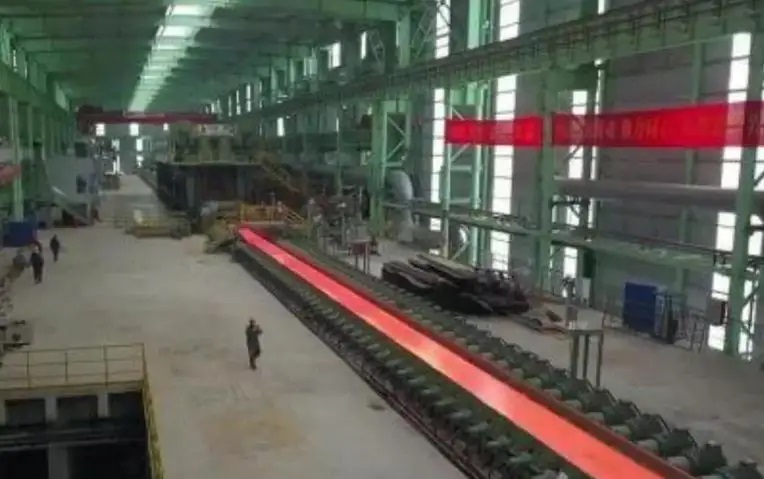 July 2023 chinese steel products import and export express
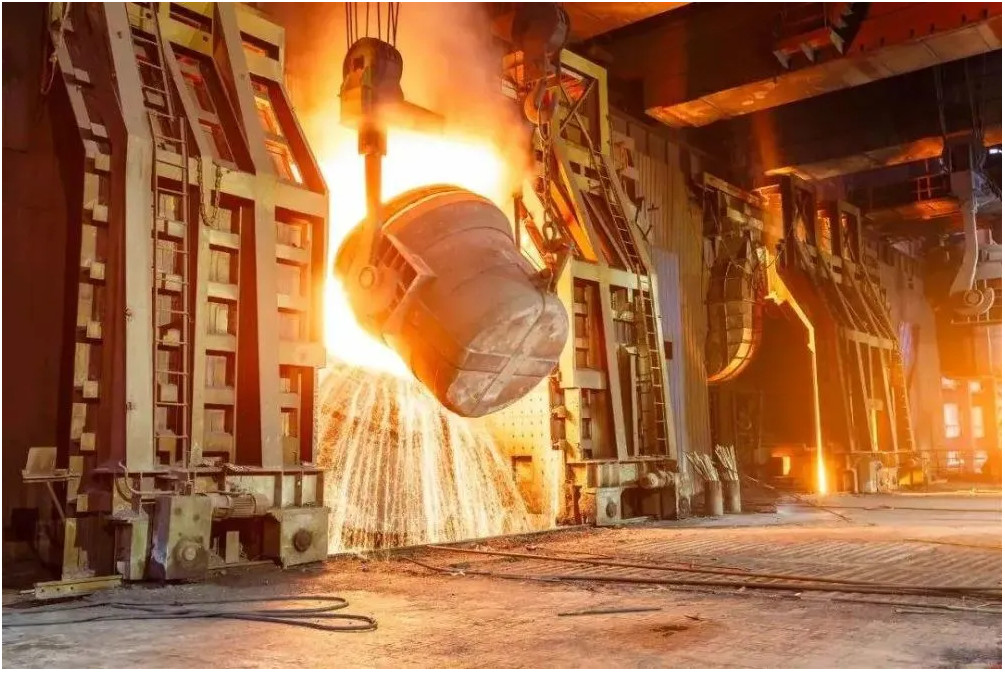 2023 China Chinese Iron and steel industrial reform in 2023
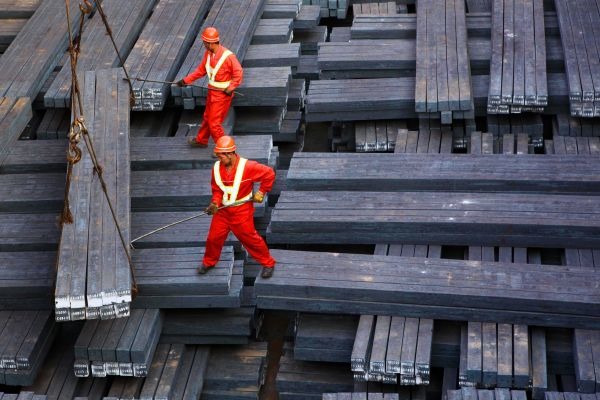 China national steel production in May 2023
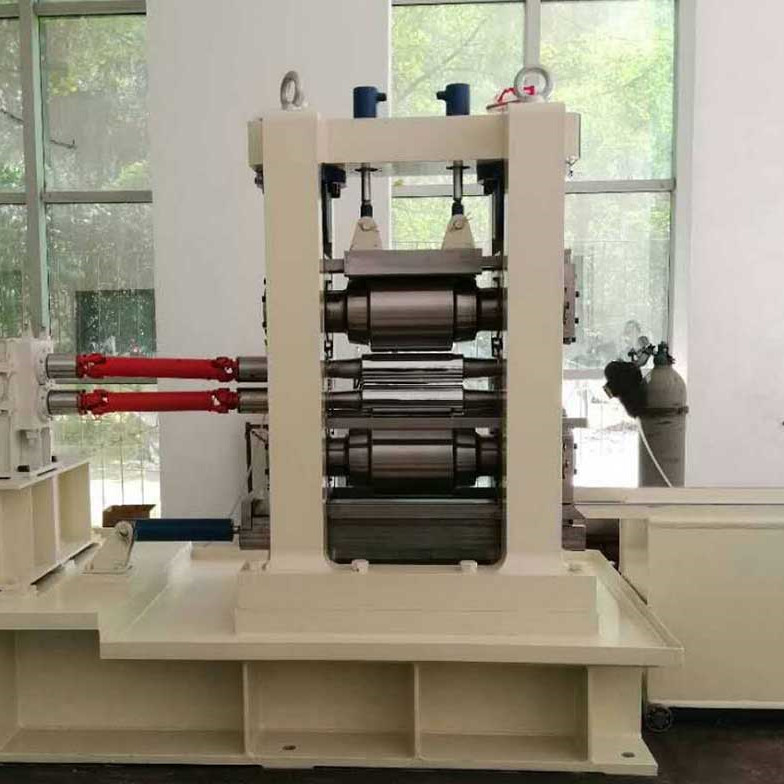 GLIMPSE 4 HIGH COLD ROLLING MILL DATA SHEET
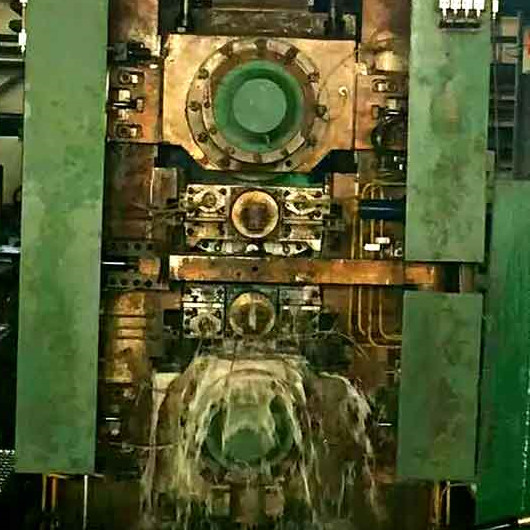 Application comparison between 6-High mill and 18-High mill on high strength steel
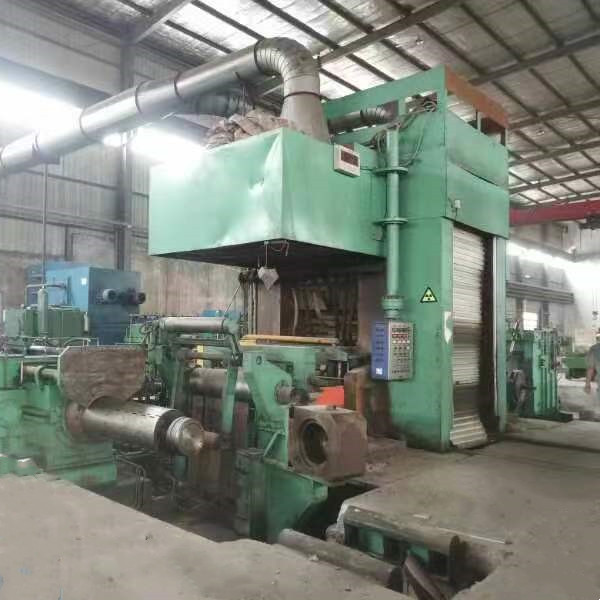 GLIMPSE HC 6 HIGH COLD ROLLING MILL DATA SHEET
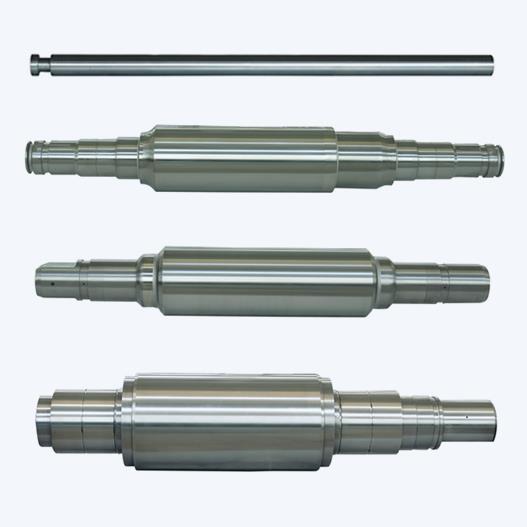 The classification of roll materials
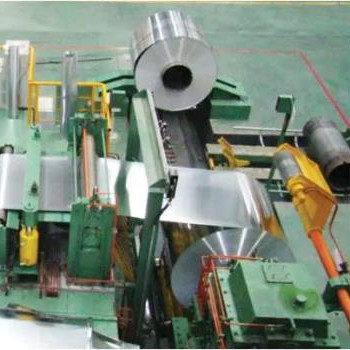 Requirements of cold rolling flat products
 GLIMPSE awarded as a high-quality Chinese supplier of high-quality rolling mill
 The principle and advantages of CVC rolling mill