
what is cold rolling process in steel industry
author: Glimpse
2022-12-28
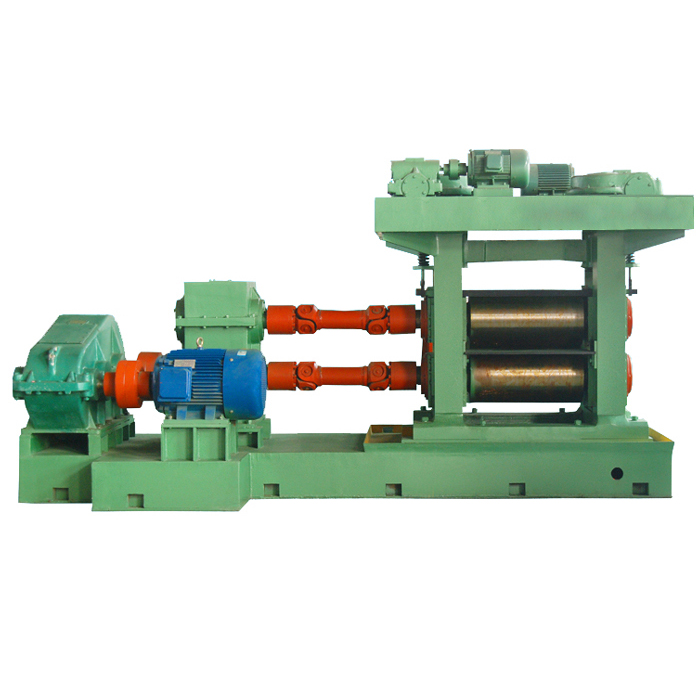
What is cold rolling process and why is it important to steel industry?
This article covers the fundamentals of cold rolling and why it's such an important function in the steel industry.
Cold rolling is a process that occurs after hot rolling in order to reduce the thickness, increase the yield and tensile strength and pliability of metal.
What is cold rolling? The definition of cold rolling
Cold rolling is an industrial process in which materials are deformed by applying strain under the recrystallization temperature to certain properties. The resulting physical properties vary, depending on how much strain is applied in the process.
In steel industry, cold rolling is a very important process. Before going into final application, around 80% of steel is processed by cold rolling into flat products such as plates, sheets, strips, foils. Cold rolling involves a lot of technologies. It is a relatively expensive and labor-intensive process, but the improved mechanical properties increase the value of the finished product, whether that is a sheet, strip, or coil.
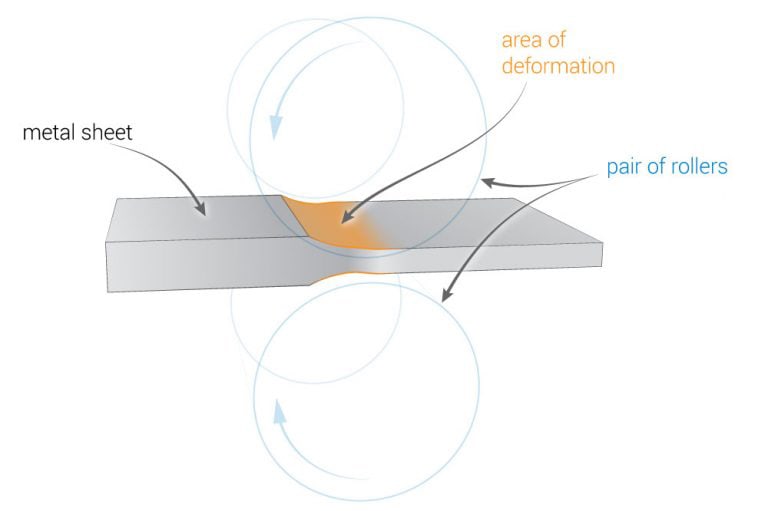
Basic diagram of the fundamental cold rolling process
Why is cold rolling process important in steel industry?
The answer is that by cold rolling process materials can achieve valuable properties which are not available by other processes such as hot rolling. The main benefits of cold rolling are that it results in a smoother surface, greater dimensional accuracy and increased hardness.
The advantages of cold rolling as below:
Cold rolled products have the following advantages over hot rolled:
greater dimensional accuracy
hardness improved by up to 20%
increased yield strength
increased tensile strength
improved surface finish
improved straightness
The result of cold rolling, i.e., increased hardness, is sometimes referred to as temper, but this is not to be confused with the heat treatment process known as tempering.
The amount of cold rolling that is performed on a sheet of metal determines the name given to the stock.
Full hard, half hard and quarter hard stock are terms used to describe metals that have a reduction in depth of up to 50% after rolling. As a result, the yield point increases and ductility reduces. The grain orientation is also altered.
Skin-rolled metal is only reduced by up to 1%, and it may be necessary to smooth the surface to prevent wrinkling. The metal increases in ductility, making it ideal for stretching later.
Another main benefit of cold rolling is that finish material can be bent relatively easily. Full hard metal bends to a maximum of 45°, half hard to 90°, and quarter hard can bend right back on itself. The fact that the materials do not fracture make it useful for many applications that require bending and shaping of the material.
Hot rolling vs. cold rolling
Rolling is an important function of the steel industry. It’s a steel fabrication process involving passing the metal through a pair of rollers. There are two main types of rolling process:
Flat rolling – the finished product is a sheet
Profile rolling – the finished product is a bar or rod.
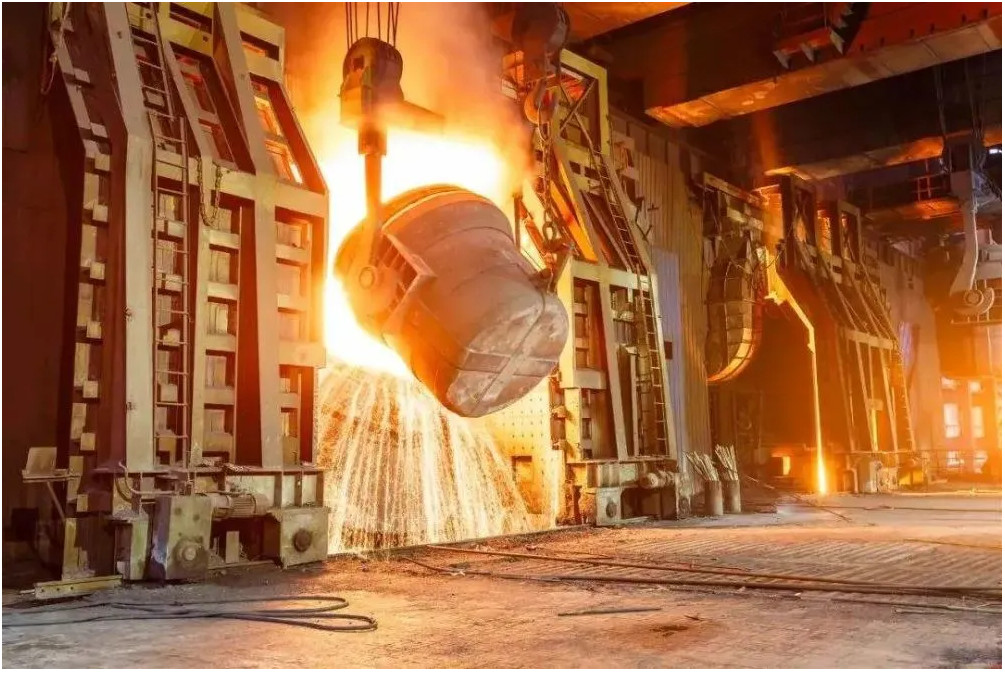
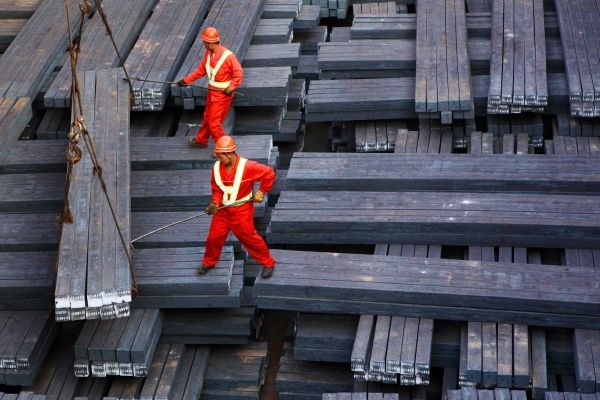
The process always starts with hot rolling. Hot rolling refers to the process of rolling steel at a temperature typically above 900 °C, greater than its recrystallization temperature. This allows steel sheets to be made in larger, thicker sizes, ideal for the manufacture of railway rails, large beams, or girders.
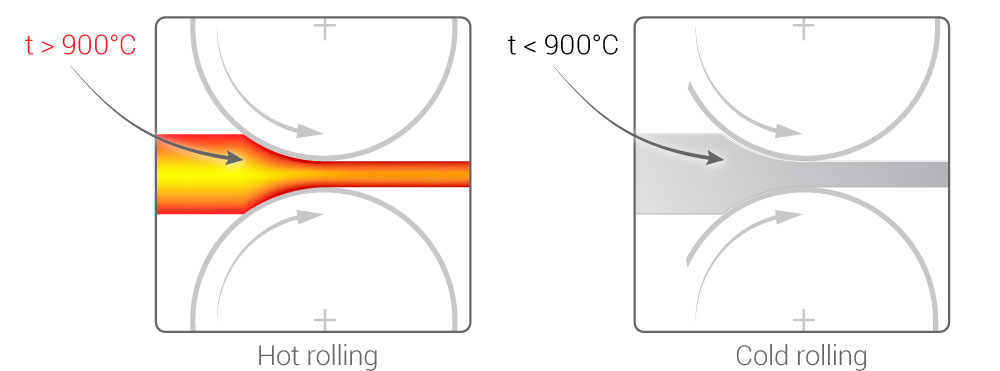
Hot rolling vs. cold rolling
Before moving on to cold rolling, the metal is ‘pickled’, which means the scale formed by hot rolling is removed from the surface of the metal, otherwise it would interfere with the process.
Cold rolling takes the hot rolled product and processes it further. After hot rolling, the steel is cooled to room temperature, then passed through cold rollers at a temperature lower than its recrystallization temperature. This rolling process is called annealing and relieves stress and leads to a higher yield strength and greater hardness. This is due to reorientation of the grain and the creation of flaws in the crystal structure, leading to microstructure hardening.
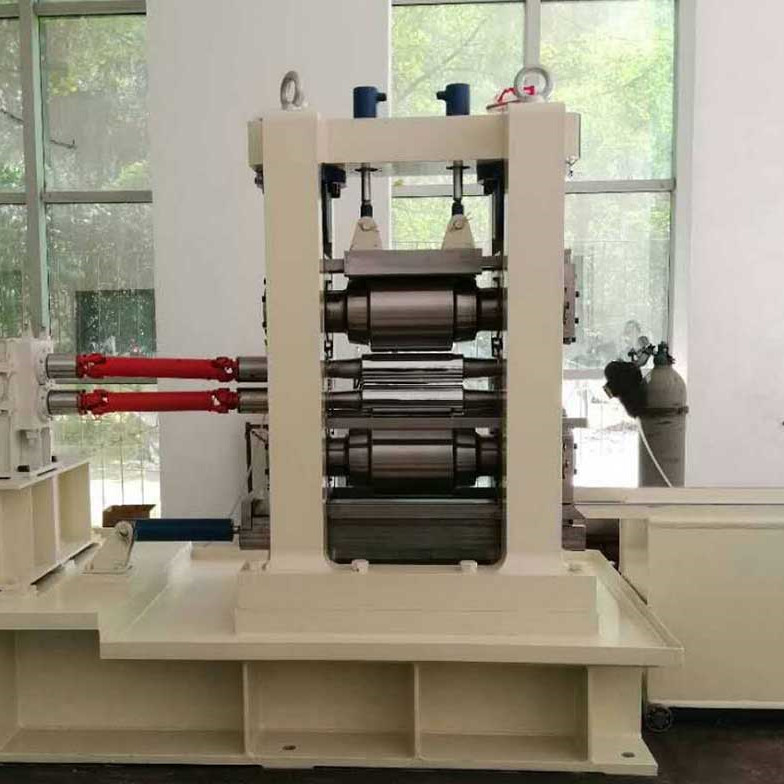
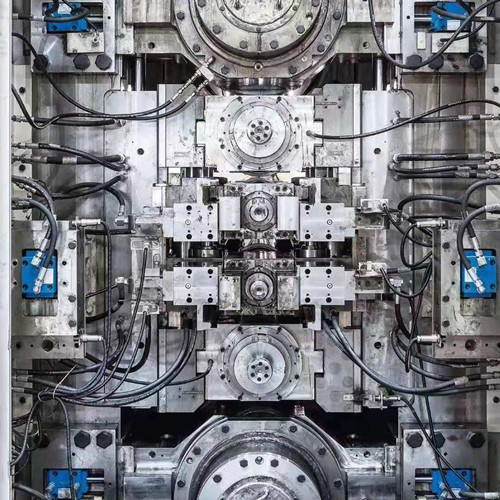
The cold rolling mill is usually fitted with thickness gauges that check the steel as it comes out of the rollers. Reversing mills are designed so that the steel can be reversed and pushed back through the rollers which are brought closer together each time until the desired thickness is achieved. Multi-stand mills have three to six pairs of rollers in a series, each pre-set to reduce the thickness by a certain percentage until the final thickness is reached.
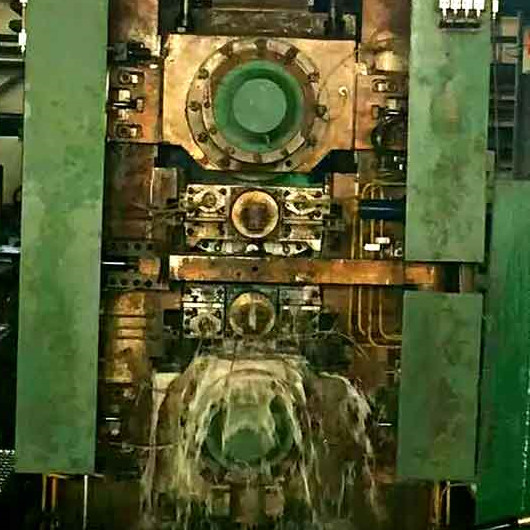
Usually each pass will reduce the thickness between 50 to 90%. Due to the high compression forces and friction, the temperature of each pass has the potential to reach as high as 250 °C. Therefore a cooling agent must be used to keep the rollers and metal cold and lubricated. Oil or water are usually used for this purpose.
The resulting metal typically has a thickness of between 0.12 to 2.5 mm. Due to the thinness of cold-rolled steel, it is used for applications such as drinks cans or lightweight vehicle panels, light aircraft etc.
Modern, efficient cold rolling mills can roll pickled sheets or strips at speeds of up to 4 m/s and tandem mills that are continuously working can produce up to 2.5 million tons of cold rolled steel annually.
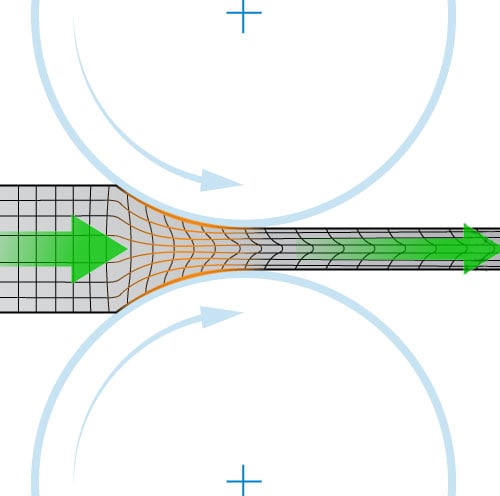
Adjustment of the grain structure during the process
Keywords: cold rolling, cold rolling process, steel industry
This article covers the fundamentals of cold rolling and why it's such an important function in the steel industry.
Cold rolling is a process that occurs after hot rolling in order to reduce the thickness, increase the yield and tensile strength and pliability of metal.
What is cold rolling? The definition of cold rolling
Cold rolling is an industrial process in which materials are deformed by applying strain under the recrystallization temperature to certain properties. The resulting physical properties vary, depending on how much strain is applied in the process.
In steel industry, cold rolling is a very important process. Before going into final application, around 80% of steel is processed by cold rolling into flat products such as plates, sheets, strips, foils. Cold rolling involves a lot of technologies. It is a relatively expensive and labor-intensive process, but the improved mechanical properties increase the value of the finished product, whether that is a sheet, strip, or coil.
Basic diagram of the fundamental cold rolling process
Why is cold rolling process important in steel industry?
The answer is that by cold rolling process materials can achieve valuable properties which are not available by other processes such as hot rolling. The main benefits of cold rolling are that it results in a smoother surface, greater dimensional accuracy and increased hardness.
The advantages of cold rolling as below:
Cold rolled products have the following advantages over hot rolled:
greater dimensional accuracy
hardness improved by up to 20%
increased yield strength
increased tensile strength
improved surface finish
improved straightness
The result of cold rolling, i.e., increased hardness, is sometimes referred to as temper, but this is not to be confused with the heat treatment process known as tempering.
The amount of cold rolling that is performed on a sheet of metal determines the name given to the stock.
Full hard, half hard and quarter hard stock are terms used to describe metals that have a reduction in depth of up to 50% after rolling. As a result, the yield point increases and ductility reduces. The grain orientation is also altered.
Skin-rolled metal is only reduced by up to 1%, and it may be necessary to smooth the surface to prevent wrinkling. The metal increases in ductility, making it ideal for stretching later.
Another main benefit of cold rolling is that finish material can be bent relatively easily. Full hard metal bends to a maximum of 45°, half hard to 90°, and quarter hard can bend right back on itself. The fact that the materials do not fracture make it useful for many applications that require bending and shaping of the material.
Hot rolling vs. cold rolling
Rolling is an important function of the steel industry. It’s a steel fabrication process involving passing the metal through a pair of rollers. There are two main types of rolling process:
Flat rolling – the finished product is a sheet
Profile rolling – the finished product is a bar or rod.
The process always starts with hot rolling. Hot rolling refers to the process of rolling steel at a temperature typically above 900 °C, greater than its recrystallization temperature. This allows steel sheets to be made in larger, thicker sizes, ideal for the manufacture of railway rails, large beams, or girders.
Hot rolling vs. cold rolling
Before moving on to cold rolling, the metal is ‘pickled’, which means the scale formed by hot rolling is removed from the surface of the metal, otherwise it would interfere with the process.
Cold rolling takes the hot rolled product and processes it further. After hot rolling, the steel is cooled to room temperature, then passed through cold rollers at a temperature lower than its recrystallization temperature. This rolling process is called annealing and relieves stress and leads to a higher yield strength and greater hardness. This is due to reorientation of the grain and the creation of flaws in the crystal structure, leading to microstructure hardening.
The cold rolling mill is usually fitted with thickness gauges that check the steel as it comes out of the rollers. Reversing mills are designed so that the steel can be reversed and pushed back through the rollers which are brought closer together each time until the desired thickness is achieved. Multi-stand mills have three to six pairs of rollers in a series, each pre-set to reduce the thickness by a certain percentage until the final thickness is reached.
Usually each pass will reduce the thickness between 50 to 90%. Due to the high compression forces and friction, the temperature of each pass has the potential to reach as high as 250 °C. Therefore a cooling agent must be used to keep the rollers and metal cold and lubricated. Oil or water are usually used for this purpose.
The resulting metal typically has a thickness of between 0.12 to 2.5 mm. Due to the thinness of cold-rolled steel, it is used for applications such as drinks cans or lightweight vehicle panels, light aircraft etc.
Modern, efficient cold rolling mills can roll pickled sheets or strips at speeds of up to 4 m/s and tandem mills that are continuously working can produce up to 2.5 million tons of cold rolled steel annually.
Adjustment of the grain structure during the process
Keywords: cold rolling, cold rolling process, steel industry
 Global Steel Demand Stabilizes in 2026: What Opportunities Lie Ahead for Used Steel Equipment?
  Leveler and Cut-to-Length Lines Move Toward Higher Precision as High-Strength Steel Processing Drives Upgrades
  Cold Mill Rolls: Technology Upgrades Support Higher Precision and Rolling Performance
  Domestic Hot-Rolled Coil Transactions Maintain Year-on-Year Growth, Showing Resilient Market Demand
  Green Steel Transition Accelerates the Construction of Next-Generation Pickling Lines
  Global Steel Producers Continue Investing in New Cold Rolling Mills
  Global Steel Producers Continue Expanding Cold Rolling Capacity
  Global Skin Pass Mill Market Reaches $513 Million in 2025, Projected to Exceed $623 Million by 2032
  The Critical Role of Skin Pass Mills in Cold Rolled Strip Production
  How Roll Configuration Affects Product Quality in Hot Rolling Mills
  July 2023 chinese steel products import and export express
  2023 China Chinese Iron and steel industrial reform in 2023
  China national steel production in May 2023
  GLIMPSE 4 HIGH COLD ROLLING MILL DATA SHEET
  Application comparison between 6-High mill and 18-High mill on high strength steel
 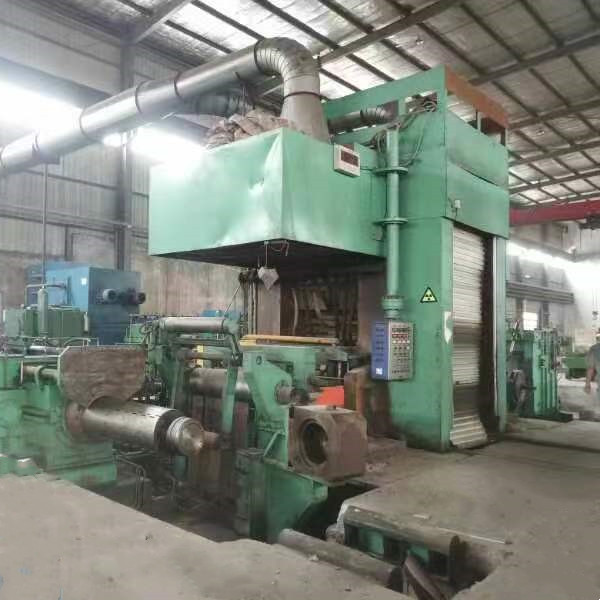 GLIMPSE HC 6 HIGH COLD ROLLING MILL DATA SHEET
 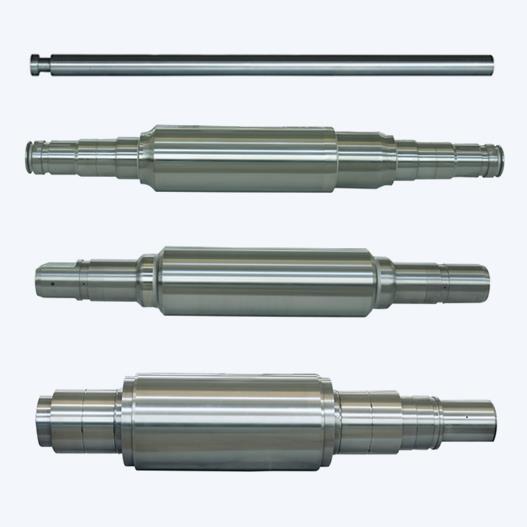 The classification of roll materials
 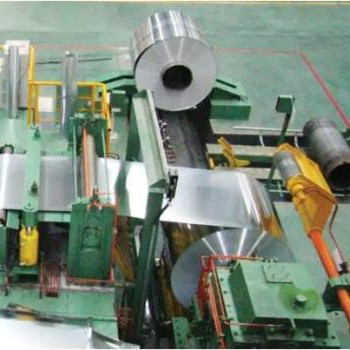 Requirements of cold rolling flat products
  GLIMPSE awarded as a high-quality Chinese supplier of high-quality rolling mill
  The principle and advantages of CVC rolling mill