
Steel strip rolling process – roll separating force
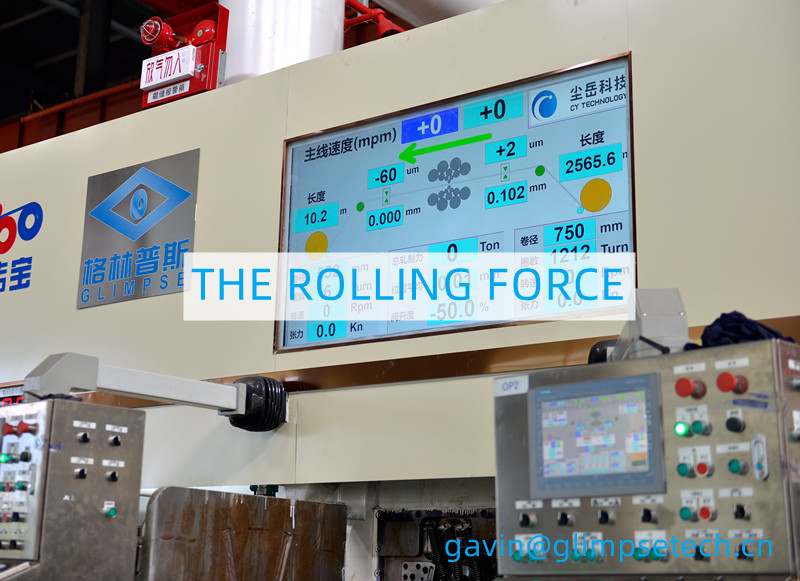
Steel strip rolling process – roll separating force
To achieve the good appearance, tight dimension tolerance and excellent mechanical properties of steel strips demanded by various downstream industries, the cold rolling process is very significant. The rolling process is conducted with a cold rolling mill. The production and quality of the rolling process depend on various factors:. They include roll separating force, torque and power, friction, tension, material properties, reduction, rolling speed, etc. We would like to breakdown these factors one by one in separate posts in the coming.
This post covers the subject of roll separating force (R.S.F). We more often call it rolling force. Let’s explore the rolling force.
What is the rolling force?
The basis of understanding rolling is to comprehend the forces created in the rolling process. The main force is rolling force.
The difference is that the deformation of the strip is permanent (plastic) while the deformation of the mill is temporary (elastic).
It is not possible to understand rolling if the notion of deformation is ignored.
The strip acts as a wedge between the two rolls and creates the forces F and F (figure 1). This is the R.S.F.
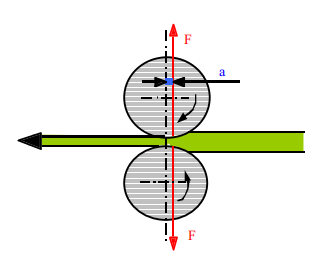
Figure 1
All parts of the housing experience R.S.F.
For a given mill, the higher the reduction and the harder the material,
the higher the R.S.F.
The R.S.F. is uniformly distributed along the width of the strip (figure 2) and is proportional to the strip width.

Figure 2
The consequences of R.S.F. are:
●roll bending (figure 3),
●a shearing effect on the necks of the rolls (figure 3),
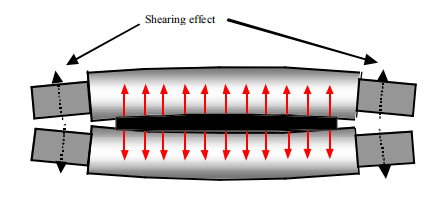
Figure 3
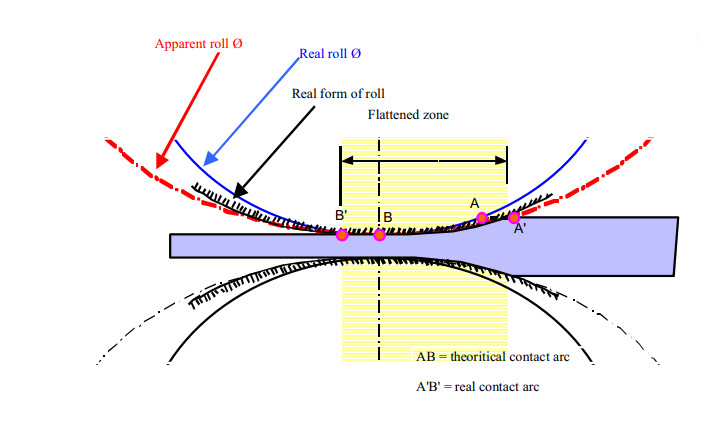
●roll flattening: the rolls are flattened where they make contact with the strip as well as with any other roll,
●deformation of the housing: some parts are in compression, others in tension,
●an axial force on the rolls, if the strip is thicker on one side than on the other (figure 4).
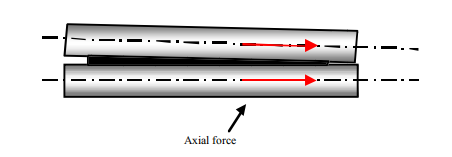
Figure 4
The rolling material undergoes two important forces in a cold rolling mill: one is the roll separating force and the other is tension. The later, tension, we will cover in the next post.
If you have any question, please feel free to contact me. My name is Gavin Leung. Email: gavin@glimpsetech.cn.
 Why choose AC motor for cold rolling? (I) Disadvantages of DC Motor
 Cold rolling mill maintenance and safety technology
 What is the training program about under a sales contract of 20 high cold rolling mill?
 Which is better? Soluble or mineral oil?
 Q8 Roll hardness check
 Q 7 How to properly do roll grinding check?
 Viscosity Classification Equivalents
 Q6: How to do roll storage inspection
 Q 5: What is roll service cycle?
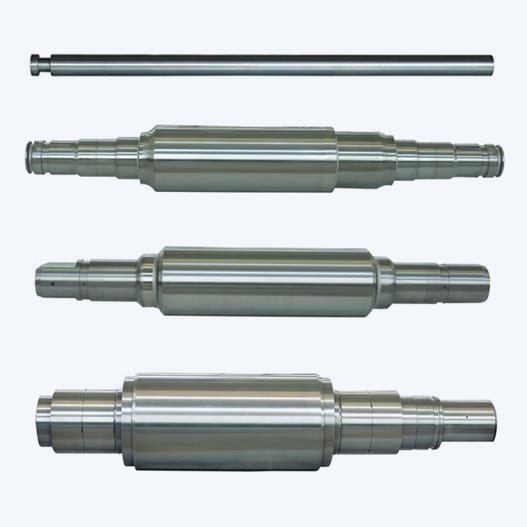 Q 2 What to do during roll incoming inspection?
 Q1 How to select a supplier of mill rolls?
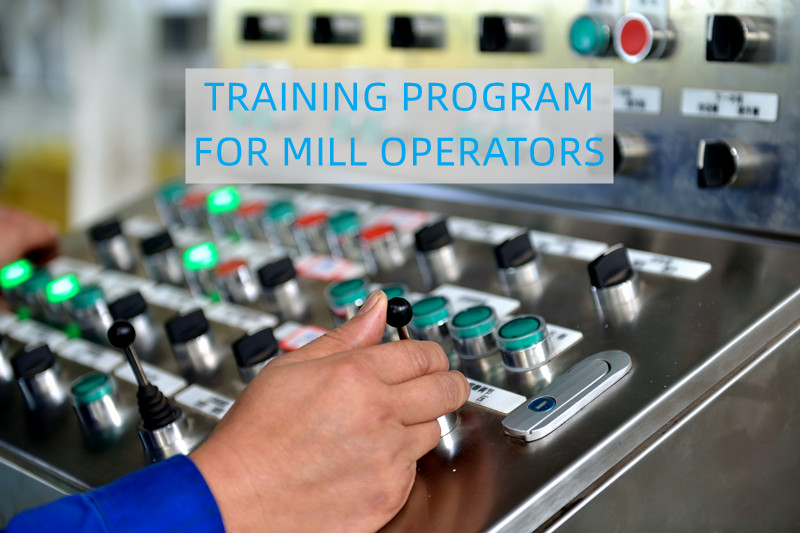 The training program for operators of cold rolling mills
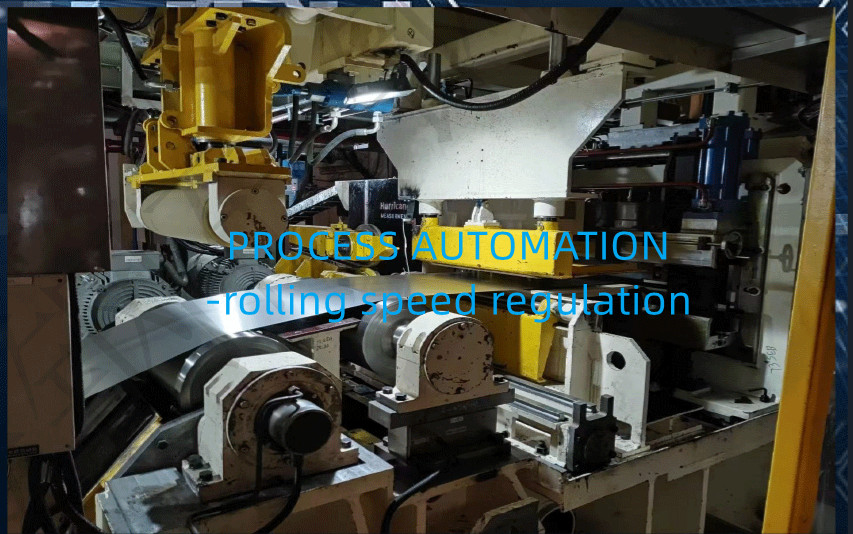 The General principle of rolling speed regulation for cold rolling mills
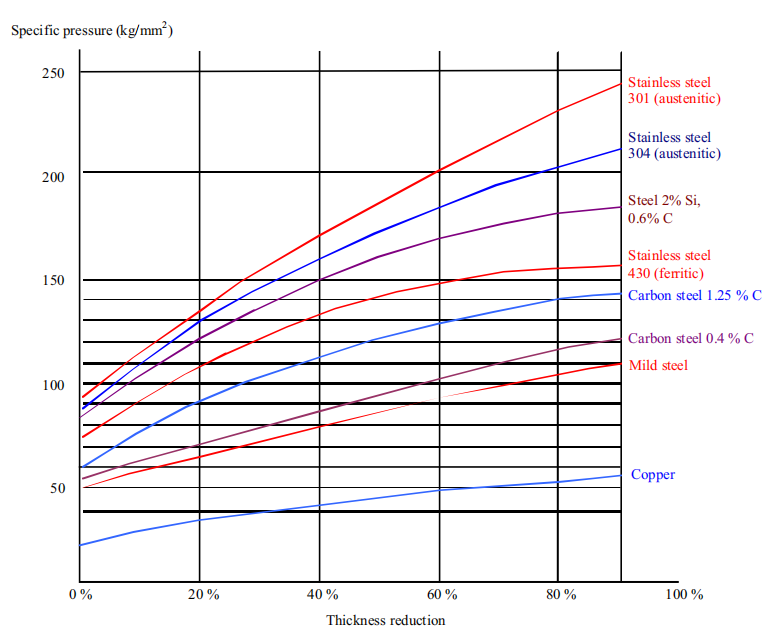 Why are stainless steels hard to roll?
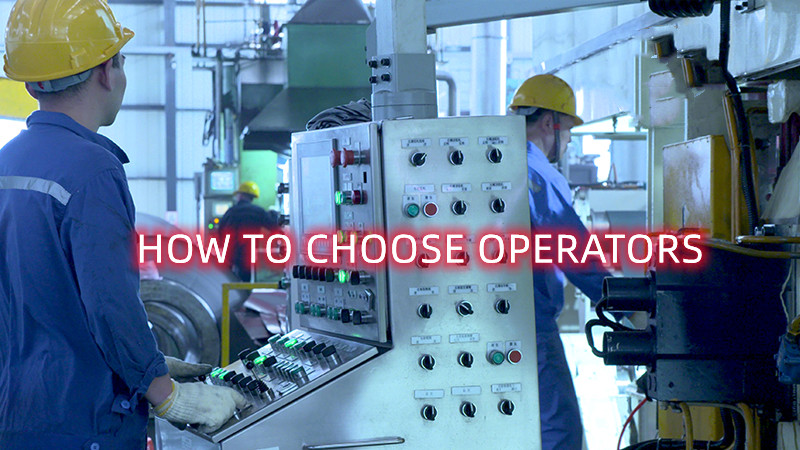 How to choose competent operators for cold rolling mills
 A brief introduction of 20 high cold rolling mill
 Pass schedules for reversible cold rolling mills.
 The design of work roll diameter
 Types of coilers in metal rolling operation
 Introduction of MKW 8 Hi cold rolling mill