
How to choose competent operators for cold rolling mills
How to choose competent operators for cold rolling mills
Mill equipment needs very good operators. They have great influence on the results. The required qualities of mill operators can be divided into two categories:
1) Human qualities
Cleverness, or more precisely “common sense,” allows the operator to understand and to “feel” what is happening in the mill, what the proper adjustments should be, and so on.
Willpower is necessary. Even a clever man is not efficient if he lacks conscientiousness and perseverance.
The operator's personality should be suited to the job — for operating and for leadership of the team.
The typical mill operator can have either of two opposite behaviors. Either he is fearful, hesitating to accelerate, deliberating unnecessarily before making a decision, wasting time. Such an operator has low productivity. However, the quality of his product is good, and he rarely experiences rolling problems. The other type of mill operator is fearless but often careless. His productivity is high, but there are many rolling problems.
A very good operator is careful when necessary and bold when possible. He acts on a "feeling" that is based on knowledge, experience, and understanding.
2) Technical knowledge
A minimum level of basic technical knowledge is useful in understanding most things. However, lack of knowledge can be compensated by cleverness and will, even though this risks difficulties and misunderstandings.
One might think that modern equipment, with all its automation, would reduce the importance of the roller. In fact, it is not reduced but rather modified. Understanding is more important; the roller needs to detect anomalies and react to them properly. Without this understanding, automation is badly used, if at all.
Selection
How can one know how to choose the best people? One method is to observe. For example, watch the operators of other equipment; a good slitter might make a good roller. Also keep an eye on mill helpers. Their job is the ideal first step in becoming a roller.
Emulation
In order to have operators copy each other's performance, it is generally useful to tell all of them what their individual strengths are. This includes productivity, quality, number of rolling problems, average time lost between strips, average time taken to change rolls, and so on.
Operator levels
Several management levels can be created.
The senior operator can roll all products. He is the leader of the team and the mentor for trainees. He has the most important role in determining rolling parameters and optimizing pass schedules.
The junior operator can roll common products by himself under certain conditions. He needs help if there are problems. However, he can take over command if the senior operator is unavailable.
The trainee is not yet ready to roll alone.
Operator training
The first step is to have some practical training concerning the equipment. Before becoming a roller, it is very useful to spend two or three months as a helper. During this period, the trainee learns the operation, the different works, etc. Some lectures have to be given about the description and functioning of the different parts of the equipment.
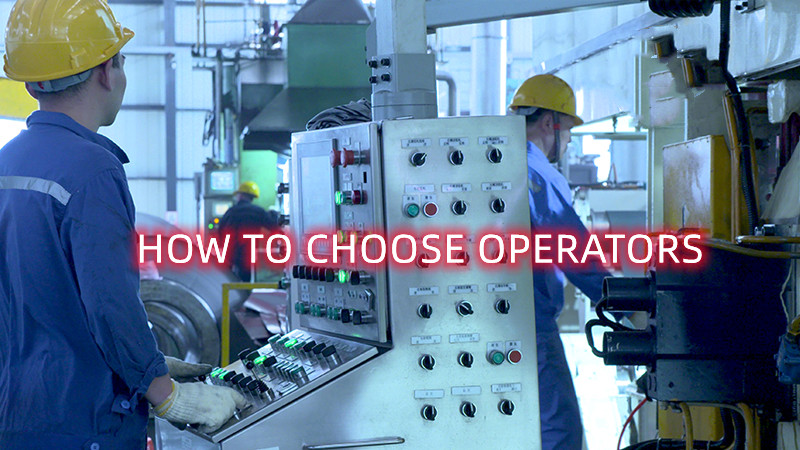
The second step is roller training. It should be methodical. Start by observing the rolling, how to adjust the shape, the thickness, the order of operations, the gauges, and so on. Then learn the desk controls. What are the different buttons and switches? What are the interlocks? Classroom lectures should be integrated into this process. The new roller must have a mentor (an experienced roller).
After an observation period (about one month next to the control desk — the trainee must know the control desk very well before rolling), the trainee can begin to carry out strip threading operations, prepare the first pass, and extract the finished coils. Then he can roll the first passes, then all passes for current jobs. Progressively the difficulties are increased.
The trainee can roll on his own if his skill is sufficient, according to the opinion of his sponsor.
It is difficult to indicate how long it takes to train a roller. It depends on the quality of the man, the type of work, the type of mill, and so on. The shortest time is one month as a helper and one month as a roller. But this training is just sufficient to roll the easiest jobs. For a big jobbing mill, running at high speed, about six months are necessary to train a roller well enough to be able to roll everything in good condition.
The person who gives the lectures can be a foreman or an executive of the production department. He should be a volunteer and like this job. He should also train people from other departments. The scope should be adapted to the need of each unit so that everyone uses the same language. The various departments can work together efficiently to solve difficulties and to discover and carry out improvements.
 Why choose AC motor for cold rolling? (I) Disadvantages of DC Motor
 Steel strip rolling process – roll separating force
 Cold rolling mill maintenance and safety technology
 What is the training program about under a sales contract of 20 high cold rolling mill?
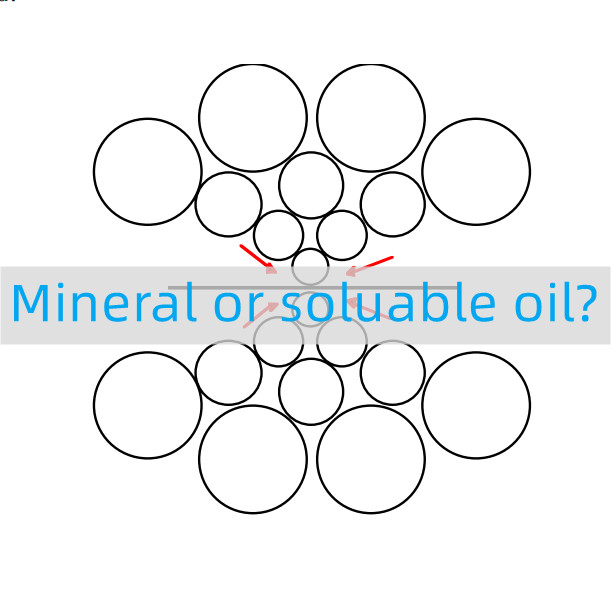 Which is better? Soluble or mineral oil?
 Q8 Roll hardness check
 Q 7 How to properly do roll grinding check?
 Viscosity Classification Equivalents
 Q6: How to do roll storage inspection
 Q 5: What is roll service cycle?
 Q 2 What to do during roll incoming inspection?
 Q1 How to select a supplier of mill rolls?
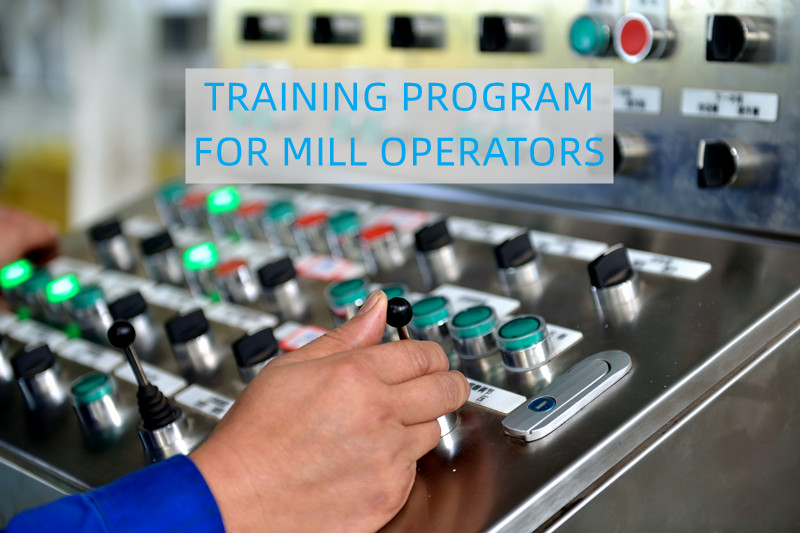 The training program for operators of cold rolling mills
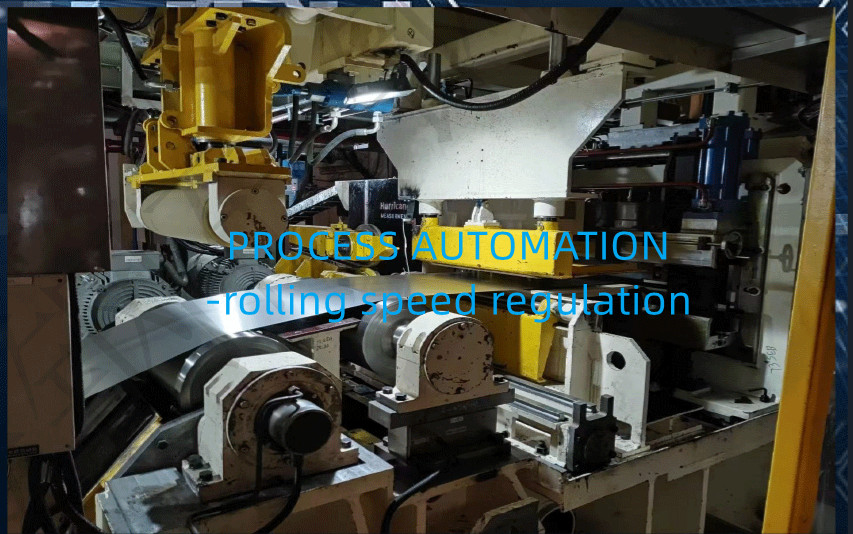 The General principle of rolling speed regulation for cold rolling mills
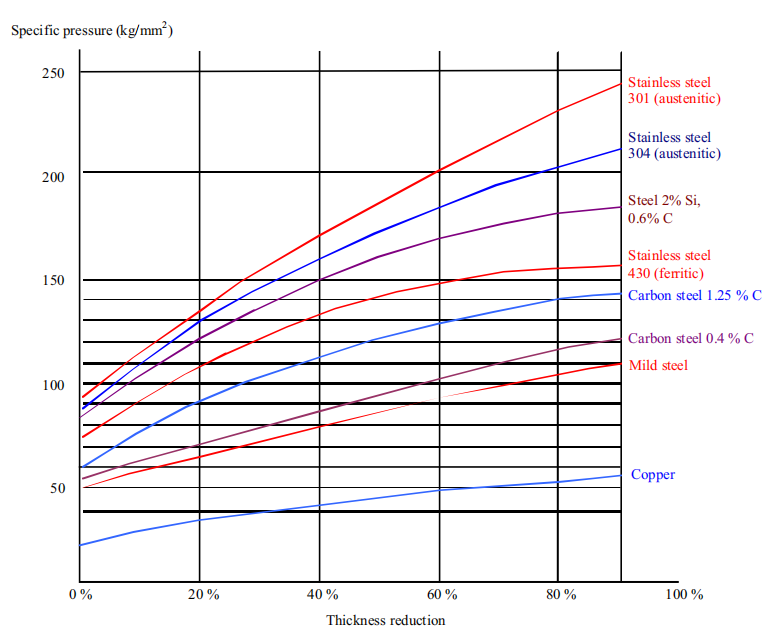 Why are stainless steels hard to roll?
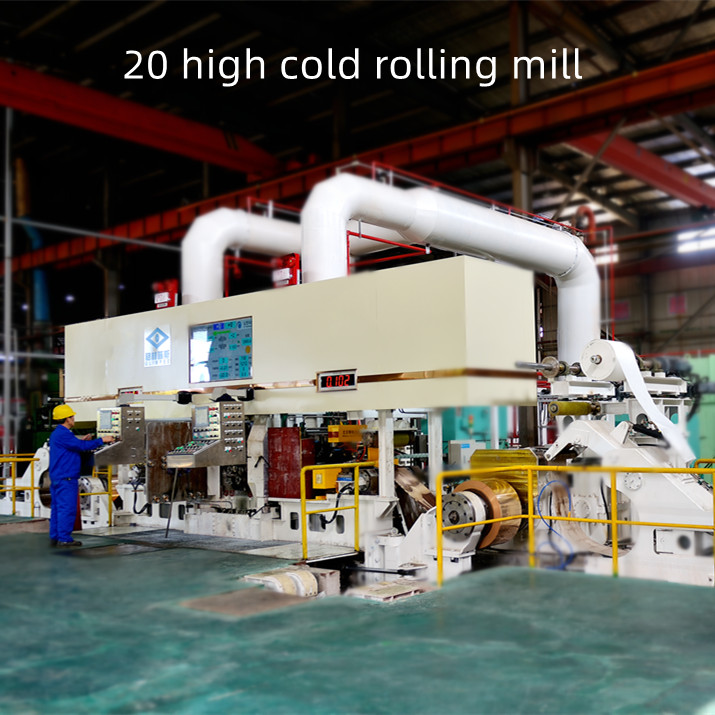 A brief introduction of 20 high cold rolling mill
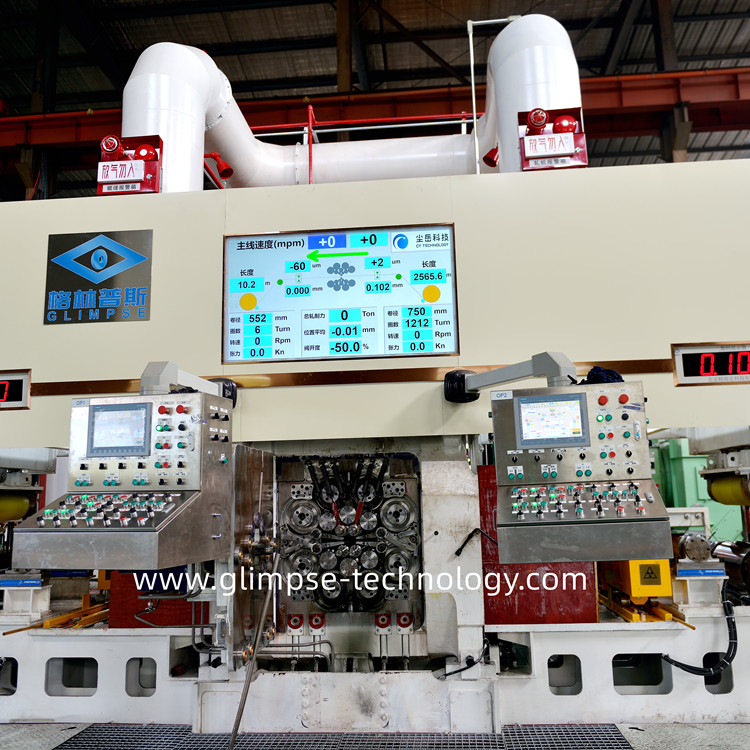 Pass schedules for reversible cold rolling mills.
 The design of work roll diameter
 Types of coilers in metal rolling operation
 Introduction of MKW 8 Hi cold rolling mill