
The design of work roll diameter
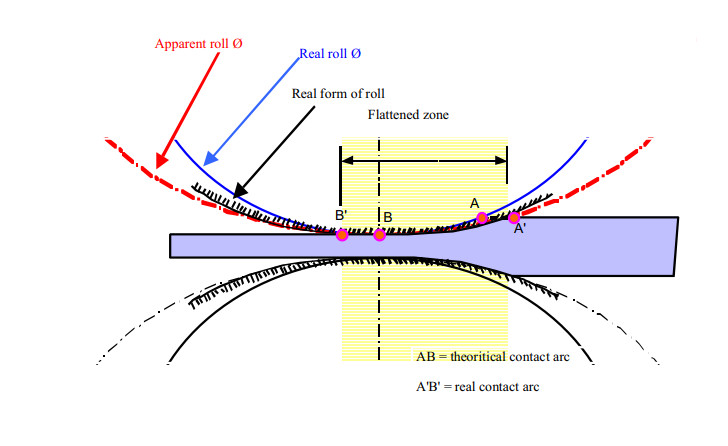
The design of work roll diameter
When coming to design a rolling mill, the first step is to determine what is the size of the work roll diameter? It is very critical for the design. Let’s take a look at the two important parameters:
Ratio A=work roll diameter/thickness to be rolled
Ratio B=work roll diameter/initiate thickness
Experience tells us a very important parameter: when the ratio roll diameter thickness to be rolled becomes too high, the reduction is quite difficult to obtain.
The ratio depends on the material to be rolled. The softer the material is, the thinner the strips that can be rolled with a given roll diameter.
The following values are indicative.
Remember that performance depends on a lot of conditions: tension, lubrication, and so on.
Obviously, it is always possible to go beyond the given figures, but the efficiency of the mill is reduced. Or, one may use some very special means, such as carbide work rolls, lubricants with heavy viscosity, etc.
In most cases, the ratio A between the work roll diameter and the minimum final thickness are (roughly) as follows:
• for soft materials (for example mild steel, C = 0.02 to 0.04%), it is easy to roll with a maximum ratio of 450 but difficult to roll with a ratio of 700.
• for hard materials (for example stainless steel grade 304), it is easy to roll with a maximum ratio of 250 but difficult to roll with a ratio of 400.
For example, if the diameter of the work roll is 130 and you are rolling mild steels, it is easy to reach 0.3 mm in thickness but difficult to reach 0.2mm. With the same diameter, it is easy to roll stainless steel, 304 grade, up to 0.60 mm, difficult to roll this material up to 0.32 units.
In most cases, the ratio B between the work roll diameter and the maximum initial thickness is roughly 12.
For example, for a work roll diameter of 60 mm, in practice, the maximum initial thickness is 5 mm. If you attempt to roll 8 mm, the first pass will be limited to a reduction of 1 mm, a reduction of only 12.5%.
Generally, the range of thicknesses rolled on the same mill is large - for example, initial thicknesses of 6 mm to 1.5 mm and final thicknesses of 2.5 to 0.2 mm. The roll diameter cannot be always the best. It is too small for the maximum thickness and too big for the minimum thickness.
 Why choose AC motor for cold rolling? (I) Disadvantages of DC Motor
 Steel strip rolling process – roll separating force
 Cold rolling mill maintenance and safety technology
 What is the training program about under a sales contract of 20 high cold rolling mill?
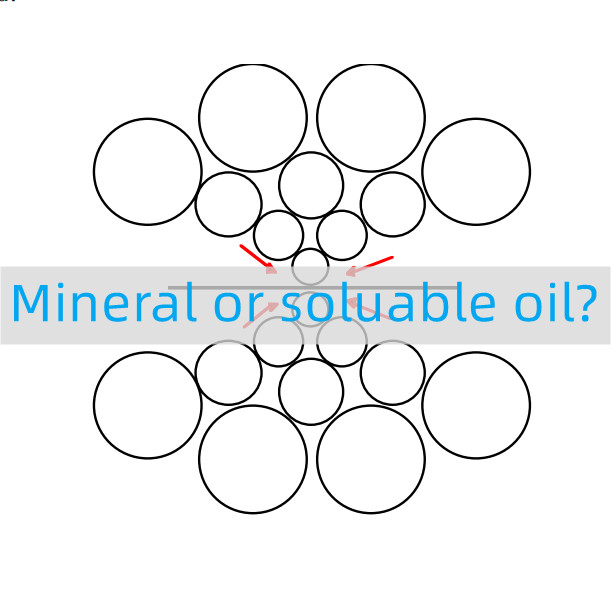 Which is better? Soluble or mineral oil?
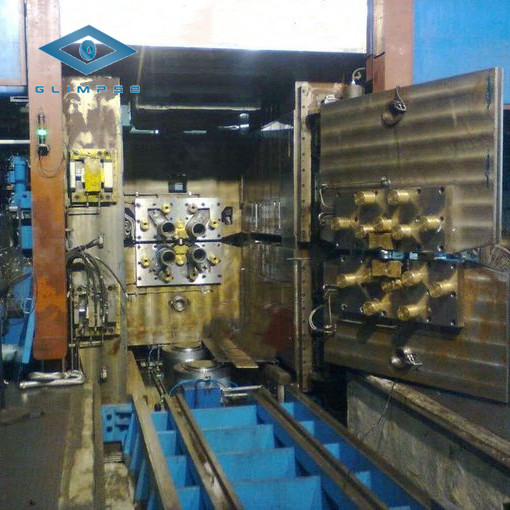 Q8 Roll hardness check
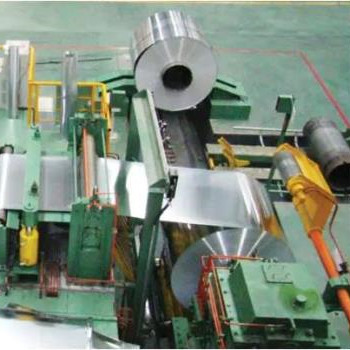 Q 7 How to properly do roll grinding check?
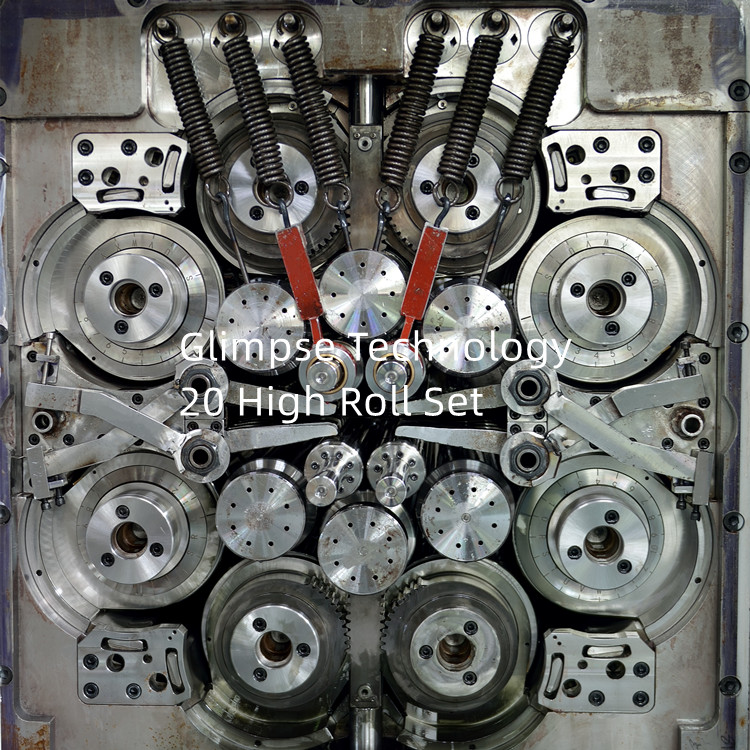 Viscosity Classification Equivalents
 Q6: How to do roll storage inspection
 Q 5: What is roll service cycle?
 Q 2 What to do during roll incoming inspection?
 Q1 How to select a supplier of mill rolls?
 The training program for operators of cold rolling mills
 The General principle of rolling speed regulation for cold rolling mills
 Why are stainless steels hard to roll?
 How to choose competent operators for cold rolling mills
 A brief introduction of 20 high cold rolling mill
 Pass schedules for reversible cold rolling mills.
 Types of coilers in metal rolling operation
 Introduction of MKW 8 Hi cold rolling mill